The Blended Intensive Program (BIP) titled "Higher Education Addressing the Erasmus+ Horizontal Priority: Environment and the Fight Against Climate Change" aims to enhance the knowledge and skills of employees at European universities. This initiative encourages institutions to engage more actively in ecological priorities and combat climate change. It incorporates the concept of "integral ecology," introduced by Pope Francis in his encyclical letter, „Laudato Si'“ (2015). The program's goal is to critically analyze the processes of the green transition and promote sustainable development across all areas of the participants' operations, including educational, research, and institutional activities.
This program directly aligns with one of the four horizontal priorities established by the European Union, focusing on environmental sustainability and the fight against climate change. Through a series of lectures and workshops, university employees will gain a comprehensive understanding of the EU Council's Recommendations regarding learning for a green transition and sustainable development, with particular emphasis on best practices from the Croatian higher education sector.
A key focus of the program is the integration of the concept of "integral ecology“. This concept transcends a purely technical approach to addressing the climate crisis, advocating for a unified response that considers the multifaceted nature of environmental challenges. The framework of integral ecology encompasses the promotion of human dignity, care for our common home, social justice, and intergenerational solidarity. The final principle highlights the importance of preserving our environment for future generations and ensuring the transmission of fundamental human values.
The objectives of the program are as follows:
- Build institutional capacities to implement green policies in universities, guided by the concept of "integral ecology."
- Facilitate the exchange of experiences related to the European Union's priorities for a green transition.
- Analyse effective practices of sustainable development by focusing on "green campus" models and those universities that have adopted the Laudato Si' approach to integral ecology.
- Promote interdisciplinary collaboration among various sectors, including science, education, religion, and society.
- Enhance the role of universities as responsible entities in addressing climate and social challenges.
- Formulate actionable proposals to improve sustainable policies within participants' home institutions.
Methods and Outcomes
The program will employ a combination of expert presentations, policy guidance, experiential workshops, and collaborative analysis of best practices. Participants will:
- Develop an understanding of the concept of integral ecology, serving as a foundation for fostering engagement at the university level in environmental stewardship.
- Critically assess the EU policy framework for green transitions in education.
- Compare diverse models for implementing sustainability initiatives.
- Analyse case studies of green campus technologies and management practices.
- Generate proposals to strengthen institutional practices and enhance competencies in developing sustainable projects and partnerships.
Virtual Component
The virtual segment of the BIP program is an essential component of the learning experience, strategically designed to prepare, support, and reinforce participants' physical mobility through two online sessions—one prior to and another following the in-person component.
Before the on-site activities commence, participants will engage in an online workshop that outlines the EU Green Deal and Erasmus+ green priorities, along with an introduction to the concept of integral ecology. Concluding the program, a virtual meeting will facilitate the presentation of group outcomes, discussion of implementation strategies, planning for future collaborations and projects, and a comprehensive evaluation of the program.
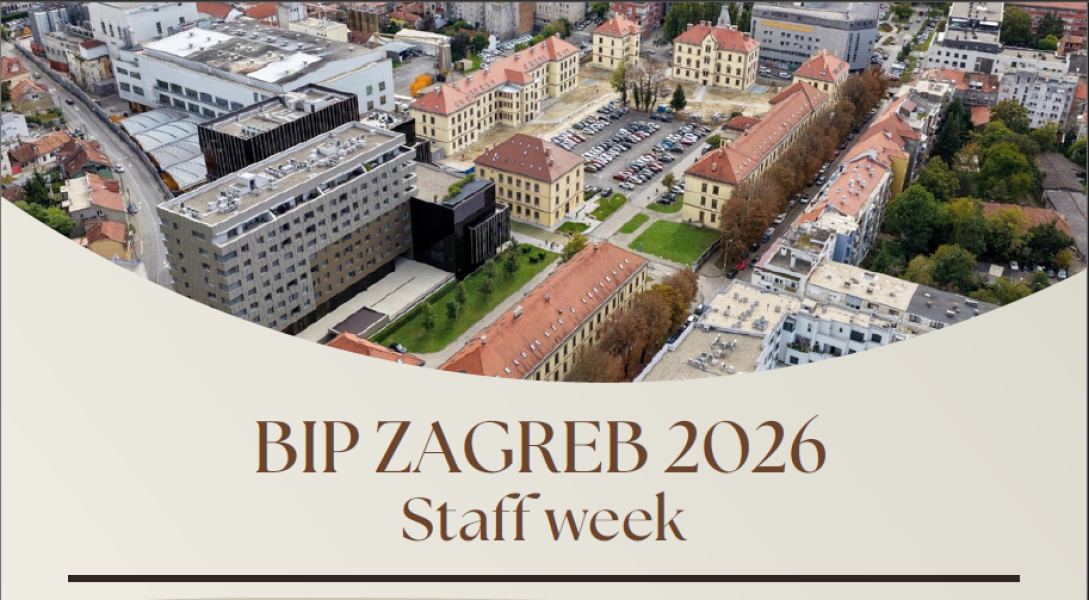
photo: Catholic University of Croatia